
Zum Hauptinhalt springen

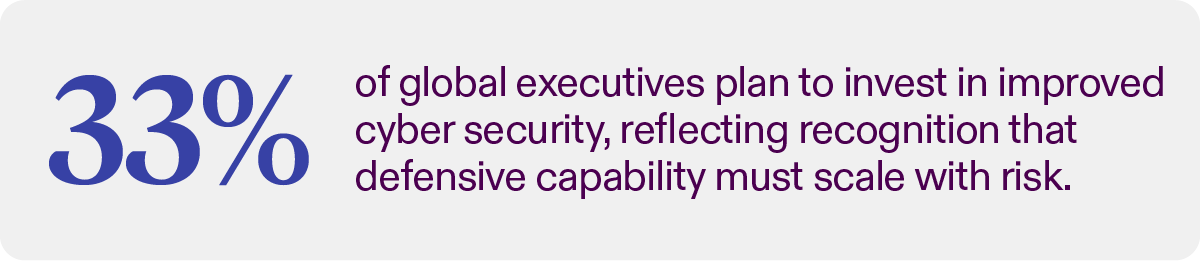
Cyber risk has become the top global concern for businesses. No longer a contained IT issue; it is now a long-lasting, systemic threat driven by interconnected systems and escalating geopolitical tensions.

Cyber criminals are successfully using agentic AI to launch large scale automated reconnaissance and phishing campaigns. These AI-driven systems execute sophisticated attacks at high speed, exploiting today’s highly interconnected technology ecosystems. The result is a threat landscape where attacks are faster, more adaptive and far harder to detect or contain. Geopolitical tensions are also driving a rise in state-linked attacks. One example is cyber attacks driven by escalating global geopolitical tensions. Evidence already shows Iran targeting US companies and infrastructure in retaliation attacks.

For organisations that are underprepared, this creates a perfect storm. Businesses of all sizes now face simultaneous, rapidly evolving cyber threats fuelled by automation, AI and global instability.

  • Rethinking resilience

    With business operations now predominantly digitally powered, business leaders must prioritise cyber resilience, as and when a crisis hits, it’s too late to build it. This requires:
    •    Robust, tested business continuity plans
    •    Clear visibility of true financial exposure
    •    Understanding insurance coverage, gaps and blind spots
    •    Ensuring capital and recovery services are in place

  •  


Resilience today is not about preventing every incident. It is about taking the relevant preventative steps to keep the impact small, the disruption short, and having the funds and services available to support recovery.